Showing posts with label SAI. Show all posts

Wednesday, August 4, 2010

Black Beautiful and Bad


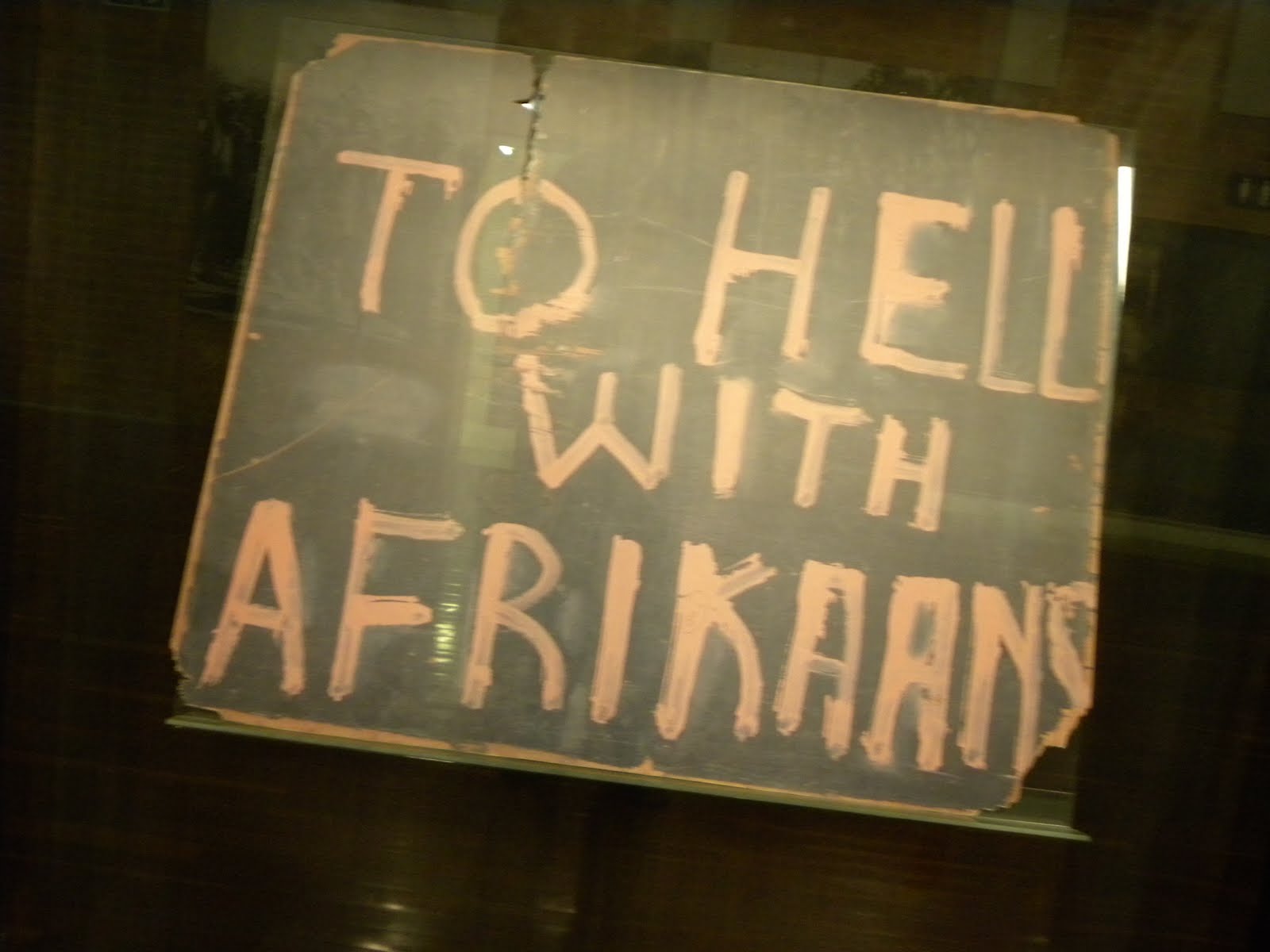
We spent the last few days of our South Africa trip at the Rugby House... the center of University of Pretoria's athletic training facilities. UP, as it is known locally, had a historical significance in the development and entrenching of Afrikaner nationalism. According to Jonathan Jansen,

"The University of Pretoria was one of the key Apartheid institutions for higher learning and one that fulfilled its white nationalist duty with considerable fervor for more than 100 years."

This was a university that churned out loyal civil servants of Apartheid, and ministers of religion who could defend its racist regime on holy grounds. Its anthropologists assigned ethnic and racial sensibilities that aligned with white racist ideology; its sociologists justified the racial order of society; its political scientists justified Apartheid rule; and its historians "impressed Afrikaner nationalism on public understandings of the past." (Jansen) It turned out prime ministers, business moguls, judges and Springbok (Rugby) captains. Its training originated in English, but was soon taken over by the language of Afrikaner nationalism, Afrikaans. At the center of the university's emblem sits the ox wagon, the symbol of the Vortrekker journey that has taken on mythical proportion in Afrikaner history.

Desegregation at UP -post Apartheid- meant overcoming the fears and racist tendencies that had become a part of university culture. Jansen writes, "This was university change in the context of a country that was itself transforming dramatically in the aftermath of apartheid." This was a long and ongoing process. The desegregation and integration of UP in recent years, means that it has a vastly different feel and look today. Outside of the rugby and cricket teams, most of the athletes we saw at UP were black. Still, all of the service workers were black, all of the cafeteria workers were black, and there seemed to be an air of elitism among whites that was palpable. A group of white American students studying abroad at UP told us how white Afrikaners would speak to them in Afrikaans, as if to test their ethnic allegiance. The seperation among races at the University was so striking that our multicultural group, a group who dined and laughed together, and generally liked each other, seemed a bit of a novelty.


The unspoken tension was never more apparent to me than the day I wore one of my favorite tee shirts. On the front, the sillohette of a naked black woman with a Pam Grier, 1970's Afro... On the back, the words Black Beautiful and Bad.


As I walked into the cafeteria that morning, no less than 3 black women approached me and exuberantly greeted me with "I love your shirt." Others nodded in my direction, gave me clinched fists of solidarity, and smiled at me with their eyes. I felt like a super hero...

...and I wondered, if the blacks are this excited about my tee shirt, what will the whites, specifically the Afrikaners, think? Hmmm... well it didn't take me long to find out. I enjoyed my breakfast and the celebrity status my tee shirt granted me. It was almost time to leave for our daily adventure, and I needed to run upstairs and grab my camera. On my way down the stairs from the 3rd floor, a group of 4 young, blonde haired Afrikaner males exited the gym on the 2nd floor, and were perfectly positioned to get a bird's eye view of the back of my tee. What I heard next was a grumbling of angry words from one of them in Afrikaans. Some words sound the same in every language... so I slowed my gait, squared my shoulders, and stopped...

...complete silence now screamed in the space that was once inhabited by angry words... The silence sounded like, "Oh my God. I hope he doesn't speak Afrikaans."

...no movement... I slowly turned my head to see the 4 youngsters standing frozen about half way down a flight of stairs...


I glared at them... ...the smallest of the 4 then decided to walk past me. As I stared at him, he refused to make eye contact, his face contorted with anger and defiance. What was said? I'll never know, but as he scurried out of the door and the others waited for me to resume movement, it was obvious that he was the culprit. When I resumed movement, so did the group behind me. I told our group what happened after I boarded the bus, and Krystal noted, "It was probably the 'Beautiful' that got to them."

"I bet you're right," I said.

Written by Frederick A Hanna

Monday, August 2, 2010

I Believe

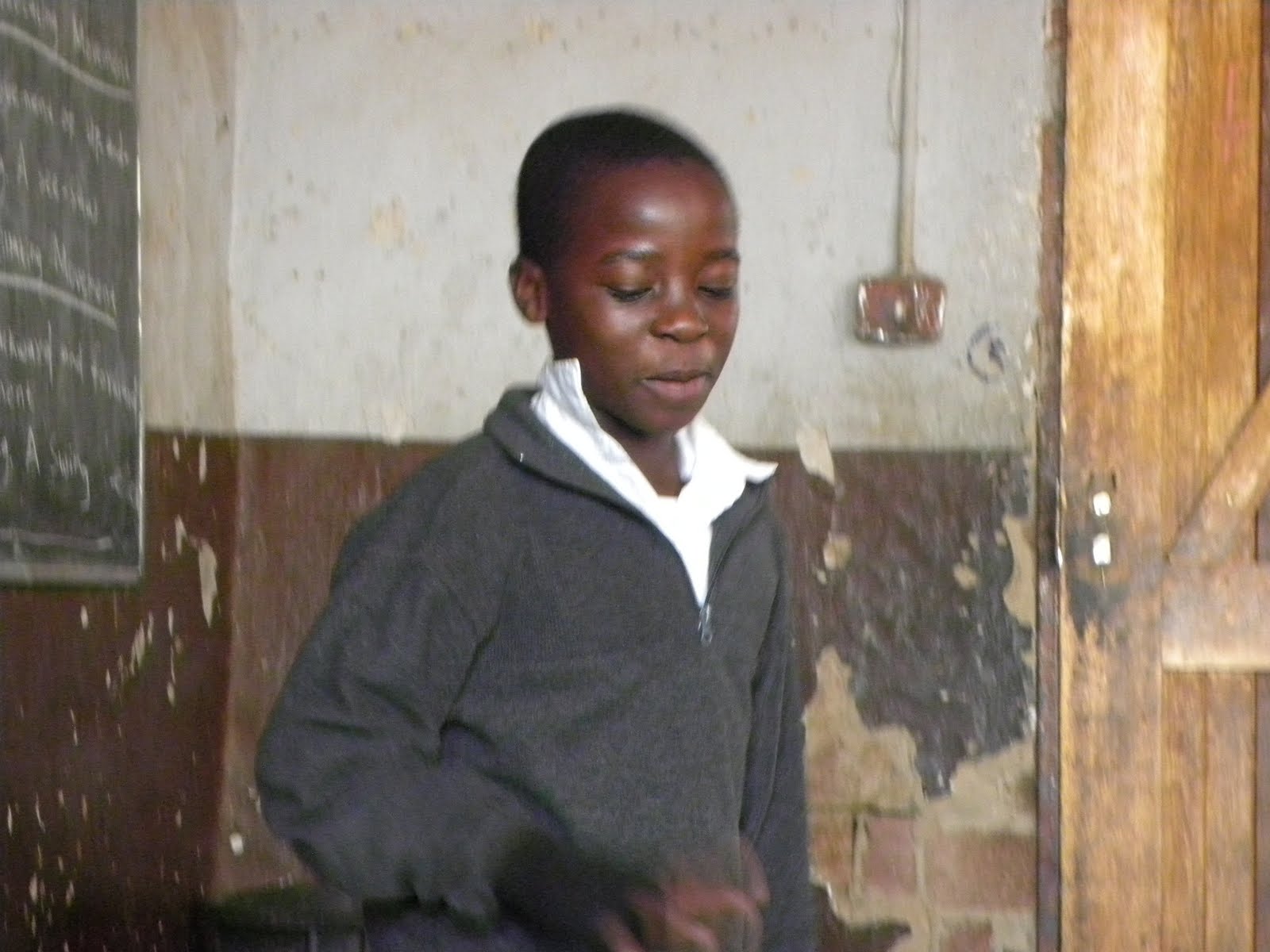
"I watched and listened to a child, a girl, who lives in a shack, walk to the front of the classroom, with dirty close cropped hair, and dirty, high-water pants, and they weren't Capri pants, and I distinctly remember the big hole in the elbow of her sweater... I watched her look into my eyes and listened to her tell me that she was going to be a doctor, and I believed her." ~ Frederick A Hanna


Sunday, August 1, 2010

But That Doll is Black


Our first night in Johannesburg and we are walking down Melville Street looking for a place to grab dinner, when something catches my eye. Two black rag dolls in the window of a toy store. I had been looking for a black rag doll for a special little girl, and here was a matching pair. One male and one female, and the male was wearing a bow tie, so you know this was meant to be. Right? Well, unfortunately the store was closed as it was late in the day, so I made plans to return before we checked out of the B&B.

Two days later and I finally made it back to the store the morning we were to check out. I was excited to make this purchase as I walked into the store and cautiously asked to see the 2 dolls in the window. Why cautiously? Because in the light of day, I noticed something different about these dolls as I spied them in the window. While they were cleverly dressed, well made and priced right; they didn't exactly look like me. When I say "me" I mean "black people."

After I asked to see the dolls, something else happened that was peculiar.
The shopkeeper (and owner) said, "You will be the 1st black person to ever buy a black doll from me!"
I said, "really?"
She said, "Yes, the white people buy the black dolls and the black people buy the white dolls."
"Strange," I thought as I looked at this doll. "I wonder why that is," I said.
"Well the white people say they remind them of their gulley's! The ones they had when they were children. " she exclaimed, which she explained to me was what they called this kind of rag doll regardless of color.
"That's a relief," I thought to myself.
"Well," I said, "I don't know if I can buy this doll because its black, like black, like I'm not black, not like this. But that doll is BLACK." She looked at me strangely and I said, "You know, like you're not white. You're pink, and none of the white dolls are white."

What followed was an insightful conversation between an American Black man and a White South African woman about the Clark Doll Test:


...And other matters of history, race and children. I explained to her that this black rag doll could have a profound affect on a child, and how I wouldn't want my daughter to look at this black doll and think it was ugly, and perhaps think of herself as being ugly by association. Without going into all the details, the conversation ended like this... The shop owner said, "If you can come back before you leave South Africa, I will have brown dolls for you, and if you don't come back, don't worry - someone else will buy them. Thank you for educating me. May we all continue to educate each other, and evolve together."

With that, we hugged and parted ways.

This is one of the reasons why I love South Africa. The simple act of buying a rag doll in South Africa can have so many implications, and can turn up such complexities and such opportunities.

Written by Frederick A Hanna

Thursday, July 29, 2010

Never Again


Tonight was my final debrief with the SAI 2010 graduate students. I started off by reading this address from Nelson Mandela, 1994:


STATEMENT OF THE PRESIDENT
OF THE AFRICAN NATIONAL CONGRESS
NELSON ROLIHLAHLA MANDELA
AT HIS INAUGURATION AS
PRESIDENT OF THE DEMOCRATIC REPUBLIC
OF SOUTH AFRICA
UNION BUILDINGS, PRETORIA
MAY 10 1994


Your Majesties,

Your Highnesses,

Distinguished Guests,

Comrades and Friends.

Today, all of us do, by our presence here, and by our celebrations in other parts of our country and the world, confer glory and hope to newborn liberty.

Out of the experience of an extraordinary human disaster that lasted too long, must be born a society of which all humanity will be proud.

Our daily deeds as ordinary South Africans must produce an actual South African reality that will reinforce humanity's belief in justice, strengthen its confidence in the nobility of the human soul and sustain all our hopes for a glorious life for all.

All this we owe both to ourselves and to the peoples of the world who are so well represented here today.

To my compatriots, I have no hesitation in saying that each one of us is as intimately attached to the soil of this beautiful country as are the famous jacaranda trees of Pretoria and the mimosa trees of the bushveld.

Each time one of us touches the soil of this land, we feel a sense of personal renewal. The national mood changes as the seasons change.

We are moved by a sense of joy and exhilaration when the grass turns green and the flowers bloom.

That spiritual and physical oneness we all share with this common homeland explains the depth of the pain we all carried in our hearts as we saw our country tear itself apart in a terrible conflict, and as we saw it spurned, outlawed and isolated by the peoples of the world, precisely because it has become the universal base of the pernicious ideology and practice of racism and racial oppression.

We, the people of South Africa, feel fulfilled that humanity has taken us back into its bosom, that we, who were outlaws not so long ago, have today been given the rare privilege to be host to the nations of the world on our own soil.

We thank all our distinguished international guests for having come to take possession with the people of our country of what is, after all, a common victory for justice, for peace, for human dignity.

We trust that you will continue to stand by us as we tackle the challenges of building peace, prosperity, non-sexism, non-racialism and democracy.

We deeply appreciate the role that the masses of our people and their political mass democratic, religious, women, youth, business, traditional and other leaders have played to bring about this conclusion. Not least among them is my Second Deputy President, the Honourable F.W. de Klerk.

We would also like to pay tribute to our security forces, in all their ranks, for the distinguished role they have played in securing our first democratic elections and the transition to democracy, from blood-thirsty forces which still refuse to see the light.

The time for the healing of the wounds has come.

The moment to bridge the chasms that divide us has come.

The time to build is upon us.

We have, at last, achieved our political emancipation. We pledge ourselves to liberate all our people from the continuing bondage of poverty, deprivation, suffering, gender and other discrimination.

We succeeded to take our last steps to freedom in conditions of relative peace. We commit ourselves to the construction of a complete, just and lasting peace.

We have triumphed in the effort to implant hope in the breasts of the millions of our people. We enter into a covenant that we shall build the society in which all South Africans, both black and white, will be able to walk tall, without any fear in their hearts, assured of their inalienable right to human dignity - a rainbow nation at peace with itself and the world.

As a token of its commitment to the renewal of our country, the new Interim Government of National Unity will, as a matter of urgency, address the issue of amnesty for various categories of our people who are currently serving terms of imprisonment.

We dedicate this day to all the heroes and heroines in this country and the rest of the world who sacrificed in many ways and surrendered their lives so that we could be free.

Their dreams have become reality. Freedom is their reward.

We are both humbled and elevated by the honour and privilege that you, the people of South Africa, have bestowed on us, as the first President of a united, democratic, non-racial and non-sexist government.

We understand it still that there is no easy road to freedom

We know it well that none of us acting alone can achieve success.

We must therefore act together as a united people, for national reconciliation, for nation building, for the birth of a new world.

Let there be justice for all.

Let there be peace for all.

Let there be work, bread, water and salt for all.

Let each know that for each the body, the mind and the soul have been freed to fulfill themselves.

Never, never and never again shall it be that this beautiful land will again experience the oppression of one by another and suffer the indignity of being the skunk of the world.

Let freedom reign.

The sun shall never set on so glorious a human achievement!

God bless Africa!

Thank you.


I chose to read this as I reflected on Edwin Smith's comment the other night that Nelson Mandela may have hurt South Africa by saying the words "never again." Why? Because it almost seems as if blacks need to create a similarly unjust system -as the one that oppressed them for nearly 2 centuries- just to close the gap in racial inequality that still exists in South Africa today. It is an utterly complex country with as complicated a history as we have in the United States against our own backdrop of racial inequity and oppression.

Reading this out loud to the group was powerful for me. To think about what Mandela had lived through, and what his hopes were for the future of his beloved South Africa against the backdrop of everything we had seen stirred deep, conflicting emotions. You could not have read this address before the trip, and read it after the trip... and have had the same experience of reading it each time. Thus, I asked the group, "What has South Africa done to you? Because if this place hasn't done anything 'to you' then you weren't really here. You may have been here physically, but you could not have truly come to South Africa if it didn't do anything to you."

Written by Frederick A Hanna

Saturday, July 24, 2010

Learn How to Tell Your Story


These 5 young men gave me a chance to share my story with them, as they shared their lives and their dreams with me. It is important that we all learn "our story." That is, the journey that God has you on in this thing called life. Why did you go through this or that? How have your experiences impacted or changed you for better or worse? How do you process each experience so that it becomes a marker on the journey, and not an exit ramp that takes you off course and stops you from reaching your God ordained destiny? Who are the people who have helped you along the way? What choices did you make that helped and/or hindered the process?

We left off with this,

1. We all need "purpose." In order to understand our purpose, we need to know who we are-our identity; what we are good at-our gifts and talents; and what we love to do-our passion.
2. Next, we must set goals, short term and long term.
3. We need to evaluate those goals in a timely fashion. If we aren't making progress towards those goals, then we need to make adjustments that will allow us to move forward.
4. Overall, we need to have a vision for our lives, and we have to believe that we can, with God's help, see that vision come to fruition.


And anyone who doesn't believe in that vision or discourages it in any way can keep it moving!

Frederick A Hanna

Wednesday, August 19, 2009

South Africa – Day 18, Going Home-Leaving Home


Well, what do you say after spending nearly three weeks doing something you have dreamed about all of your life? I remember watching the movie Roots as a child, and being fascinated with the prospect of finding my own ancestors in Africa one day. I remember the black consciousness movement during the late 80’s when we were all listening to Public Enemy, X-Clan, The Jungle Brothers, and other conscious hip-hoppers. We all wore our “Africa Pieces.” “I wear no gold around my neck, juuuussst black medallions… (Jungle Brothers—Straight Out the Jungle)” These were leather, metal, and stone medallions bearing images of Africa—hanging from leather strings or wooden beads—in colors like green, black, red, and gold—“The red’s for the blood, and the blacks for the man, the green is the color that stands for the land… Africa! Talkin’ ‘bout Mother Africa…” I finally got to experience it for myself, and I was able to come during a time of personal growth that allowed me to look below the surface, beyond my fascination with Africa to see the struggles of a people, a nation, a continent. The struggles made even more telling, more complex, and more indelible as viewed through the lens of a country still emerging from Apartheid.


As we disembarked our first flight from Cape Town to Johannesburg en route home, Heather overheard a coloured fight attendant say, “All these Americans look coloured.” If I had heard her make this statement, I would have told her, “We are.” We haven’t gone so far as to create a separate classification in order to define ourselves as separate from other blacks. If we did, we would likely all be categorized as coloured. I recently began work on my family tree and found out that my paternal great grandfather was Cuban; my maternal great grandfather was a mulatto (white and black parents); my paternal great-great grandmother was a Cuban immigrant; another paternal great-great grandfather was a Seminole Indian; my great-great-great grandfather was a slave whose mother was African and whose father was a white slave master. So yes, “I am colouredaccording to Apartheid. I would be quite amazed to find any descendants of African slaves in the U.S. whose blood remained purely African, let alone of a single tribe. As I told the students at Bergendal, African slaves in America were separated into groups who didn’t speak the same language, were not from the same tribe, didn’t practice the same traditions; families were separated; slaves were raped, escaped and married Native Americans, etc. This explains our many hues, and it explains our deep desire to find out who we are and where we come from. It explains why Africa beckons us to “come home.” The question now is, “How do I just go back home, when a big piece of my heart was left in Africa?”

Written by Frederick A Hanna

Tuesday, August 18, 2009

South Africa – Day 17, Last Day and Bergendal, 2nd Visit to Vlakte Brick and Farewells


Today is our last full day in South Africa, and I am not looking forward to saying goodbye. I have arranged for someone from the staff at Bergendal School to take Monique over to Vlakte Brick Farm. I wanted her to go as a physician in hopes that she might be able to advise the people who live in a tiny village where everyone has tuberculosis, and in order for her to experience what I experienced there. It was a feeling of utter helplessness that words just could not express.

We started off the day with our normal ritual of morning devotion before I spent some time outside just loving on the kids and letting them love on me. I sought out some of my little friends to enjoy some laughs and smiles on what would be a difficult day of goodbyes.


Soon it was time to go over to Vlakte Brick. As we drove over, I tried to prepare Monique and Gay for what they would see, but again words seemed to fail me. As we drove in, we were greeted by the village matriarch, Rhoda. We chatted a little, and I asked Rhoda if she could take us into one of the houses so that everyone could see the living conditions. We had driven passed a number of informal settlements during our trip, but had never been able to go inside. Most people advised us that going into an informal settlement was far too dangerous a thing to do. Visiting this farm community gave us a chance to go into the living quarters of some of South Africa’s poor and get a sense of what it is like to actually live in these cramped inhumane conditions. The home that Rhoda took us into was actually a bit better than the first one I visited a few days prior. The dimensions of the space were the same, but only 3 families lived in this unit. It was also a little cleaner than the first unit I visited, and there was a homemade bed in one of the rooms as opposed to blankets on the floor.

Still it was unimaginable that people were living like this. Monique would later say that she felt as though she had entered a time warp and traveled 200 years back in time to a slave plantation. While Monique and Gay talked to Rhoda, I decided to walk around and take some pictures. I spotted a friend from my last visit and went to greet her. She took me over to the building that had the water spout on the side. This is where all 48 families must get their water. She told me that there were bathing facilities in the building. She also showed me the drains where they must empty the contents of the Porta-Potties. The drains are at the same site where the clean water spout is located, and my friend expressed to me that the people were sure that their water was contaminated by the waste. Across a span of about 20 yards from where we stood in front of the water building was the farm owner’s office. On my last visit, I asked if I could talk to the owner and I was told that he was in there with his gun and would probably be “happy” to see me. Well, “momma didn’t raise no fool,” so I elected not to go over and visit that day. As I noticed customers and trucks going in and out of the office area, I turned to my friend and asked her, “Is the owner there now?” She replied that she did not know. As we talked, I noticed that there was another building adjoining the water building. I asked my friend what was inside, and she said, “that is the church.” She then asked, “Would you like to see it? Shall I get the key?”

The church was locked up. Just like many churches in America, closed and locked up most of the time. I’m so tired of irrelevant churches that haven’t figured out how in infect communities with the gospel message by seeing the church as a vehicle for social transformation, not just a place to Bible thump on Sunday’s and one other day when Bible study is held… BUT that’s another blog post… BACK to business… As she ran off to get the key, I started my steady determined walk to the owner’s office half wondering if these would be my last steps.

I walked confidently into the little building where I was greeted by a receptionist. It was a brightly lit, clean, well kept office, and it seemed that business was good.

Keep in mind that the people of the village had all told me that the farm had been sold and that the clay (brick making) business had been shut down as a result of the sale. This was the reason they had all lost their jobs. I was perplexed by what I saw, and figured that there must be more to the story. I walked up to the counter and was greeted warmly by the receptionist. She asked how she could help me. I said, “I am a pastor from the United States and I would like to speak to the owner about the living conditions of the people on the farm.” I was hoping he might not shoot a clergyman. The woman said, “I will see if he is available,” and to my surprise he agreed to speak with me. I walked into the office to see a rugged looking, forty-something white male sitting in front of his computer and talking on his PDA phone. He told me that he was not the owner, but the manager (the owner’s son-in-law). I asked him what had happened with the business and why the people had not been paid their severance. His response to me was that the business was broke. I asked him about the trucks going in and out and he forcefully replied that he could show me the books that business was down 85%. He stated that the recession had killed the clay business. This is a fact which I had pointed out to the people of the village the day before. I asked him if the farm had in fact been sold (as the people had told me) and he said that it had not been sold, it had all but failed and that’s why the people lost their jobs in December of 2008. He also informed me that there are 2 businesses on the farm: a clay (brick) factory and a cement factory. The cement factory was still running and about 5 of the people in the village were employed there. This was news to me, but it still didn’t explain the living conditions of the people in the village. I asked this man if the people would be paid their severance, and he said that he didn’t have money to pay them… even though the farm owner owns several other farms in the area. I asked him if he had seen their living conditions and if he knew that they often didn’t have food to eat (farm owners provide and maintain housing for their employees on these farms).

He said to me, “Look man, I don’t lose any sleep over that. I don’t have a guilty conscience. That place wasn’t like that when those people moved in!”

I replied, “But you underpaid them for years, and you did no upkeep on the property. Of course it doesn’t look the same.”

He said, “Would you like me to take you into town to one of the compounds man? Can I show you how they live there?”

I replied, “I have been to those settlements. They are horrible. BUT you are not responsible for those settlements. You are responsible for the housing here on this farm.”

He replied, “There is a housing problem all over South Africa man!”

I replied, “That’s true. BUT you are not responsible for all of South Africa. You are responsible for the housing here on this farm.”

He responded, “Pastor, I am going to have to ask you to leave,” as he stood up from his desk.

I said, “You have to be accountable to those people.”

He responded, “Pastor, I am going to have to ask you to leave,” as he walked me towards the door.”

I said, “The living conditions are deplorable.”

He responded, “Pastor, I am going to have to ask you to leave,” as he walked me over the threshold of the door.”

I said, “Don’t you care about their children?”

He closed the door and locked it as I stood outside facing him
.


I walked back to the church building in disbelief. The door was open and my friend rushed over to find out what happened in the owner’s office. An older woman accompanied her. They stared at me, but wouldn’t ask the lingering question… “What did he say?”

I told them that he said the farm wasn’t sold, and that their job loss was due to a decline in business. I also told them that he said he was broke, and that he had no plans of paying them any severance. I didn’t believe that he was broke, but it didn’t matter because that’s what he had said, and it was obvious that he had no plans to pay any of those people a dime. “He doesn’t care about you,” I said. “If you dropped dead on this farm, he would be happy. You have to leave this place. There’s nothing here for you. He doesn’t care.” They nodded in agreement. Easy for me to say (well not really), but some of them have lived on that farm for 30 years. The prospect of leaving can’t be easy.

I looked at the makeshift church, and rejoined the group. As we drove away, those who had visited for the first time were visibly shaken. As we contemplated what we had just seen and heard, I began to explain how the people as laborers on the farm are tied to those properties, which they don’t own, and can be evicted from at any time. If they gripe about anything, they have to worry about being kicked out. I also began to share that the schools on farms, like Bergendal, had to play a political game of chess with the farm owners who actually own the schools. These kinds of schools were built by farmers to educate the children of the farm laborers. It was obviously in their best personal interest to educate the children only to the point that they would be the next generation of farm laborers. The farm owner’s wife would have been the schoolmarm at one time. Eventually, schools like this were leased to the government, but principals must still play nice with the owners. Ultimately, the farm schools belong to the farm owners. Now that’s power. Employment, housing, and education all in the hands of one man… This is the case for countless farm laborers in this part of South Africa.

I also began to share that all farm owners weren’t so heartless. I had heard that the owner of the Bergendal School was known to be generous, and to take good care of his workers. Adele (a teacher at Bergenadal and our escort) began to expand on this. She took us to the Seidelberg Wine Estate. Mr. Seider is the owner of the estate, the Bergendal School, and the Fairview homes. Mr. Seider has paid for some renovations at the school, secured donations of coats for the children, and recently held a jazz concert where the proceeds were donated to the school, and more (more info here: http://www.seidelberg.co.za/index.php?option=com_content&task=view&id=24&Itemid=49). We stopped at the estate, and had a look at their glass blowing operation. There is a store on the site where beautiful glass art pieces blown on the site are sold.


From there we went back to the school which is right next door. I decided to take Monique on a walk through the Fairview homes located just next door to the school for comparison to Flakte Brick. We found a couple of students who lived at Fairview and they took us on a quick tour. It was a thousand times better that Flakte Brick.

Monique’s comment was, “So it doesn’t have to be that way.”

Exactly,” I said.

Truth be told, the whole farm laborer/farm owner relationship needs to be overhauled, as it does in many parts of the world including the U.S., but people should be treated like their lives matter.


We spent the rest of the day hanging out with the kids… laughing, dancing, singing… it was a great time. It was capped off with a few songs from the Bergendal Gospel Choir, and boy are they good. I mean they are fantastic. We each said our farewells, Tristian wowed them with a quick Que Dawg step show, I told them my life story, we prayed, we all cried, hugged, blessed, ate, exchanged gifts and eventually tore ourselves away. Two words, “life changing.”


We finished the day with several celebrations, food, reflections, a visit to 2 churches, words of encouragement and affirmation. One thing that was interesting for me is that they let me speak and pray as a minister on several occasions. I usually try to keep the clergy and the academic separate, but they allowed me to be both with no censoring. I’m saddened to say goodbye to my new family.


Written by Frederick A Hanna

Monday, August 17, 2009

South Africa – Day 16, Stellenbosch, Amstelhof, Madiba House and Dennegeur


A day ago I received a message that I would not be back at Bergendal on Thursday. Today, Claude de Jager was to pick me up spend a little time giving me his perspective on South Africa, education, poverty, and the issues that impact the schools in Paarl. Claude is the principal of Amstelhof Primary and is very knowledgable about the local school sytem. We started off by taking a ride to the University of Stellenbosch. I had heard about this university the night prior from Mr. Thomas. He was talking to me about accessibility to South African universities, and whether or not blacks and coloureds could get a fair shake at “university.” Regarding Stellenbosch he said (paraphrasing), “How could one expect to get a fair chance sitting in classroom with the same professors who had told them that blacks and coloureds did not belong in schools with whites because they lacked the mental capacities... the same professors who had voted for Apartheid?” Mr. Thomas said that if perhaps, on the long mile to freedom, they had each walked a half mile he could make sense of it, but since blacks and coloureds had walked a half mile and whites had only walked a few meters, it didn’t make sense.


So with these thoughts in mind I arrived at the University of Stellenbosch, which would simply be a site to set the stage for my day with Claude. We went there to have coffee and to begin a dialogue. Having been in the midst of the impoverished sections of Paarl and inundated with the narratives of the children for the last few days, driving through the streets around the university was a bit surreal. It could have been almost any university in almost any U.S. city… beautiful buildings, students hurrying to and from classes, signs about upcoming functions, and very few students of color. The school is priced out of consideration for most non white South Africans. Stellenbosch is one of South Africa’s former all white institutions and the powers that be have fought to maintain its cultural heritage; thus, the primary language of education is still Afrikaans. Afrikaans was used in schools in South Africa very much in the same way that English was used throughout America’s history. It was used to exclude and prevent certain groups from both attending schools and from achieving in schools. Some could forcefully argue that the English language is still used for exclusion and subordination in American schools today. Claude’s own daughter attended Stellenbosch. For Claude, his daughter’s attending and graduating from Stellenbosch was a way of conquering a myth that students of color couldn’t compete with whites at the university level. It was a way of “showing them” that we were/are every bit as good as they are. This narrative echoes those of many African Americans who desired to prove to whites that they were/are every bit as intelligent as whites and able to compete academically at the best universities. Claude also discussed South Africa’s educational legacy… that blacks were to be educated as laborers, coloureds were to be educated as artisans, and whites were to be educated to be society’s elites. At one time it was against the law for a black man to pick up a hammer or a trowel in South Africa. The black man’s tool was the shovel. This subordination was perpetuated in the schools through the Bantu laws, and substandard curricula for black and coloured schools… the different teacher student ratios: 1:20 for whites, 1:50 for coloureds, and 1:Whatever for blacks. A black school could have 100 learners and 1 teacher. Blacks were typically educated to a 5th grade level, coloureds to a 9th grade level… reminiscent of industrialized education for blacks in the Jim Crow era… actually worse. Keep in mind that South Africa today has approximately 49 million people: about 4 mil white, 5 mil coloured, 1 mil Asian, and the rest black. A hierarchy was set up which even taught the coloured man to fear the black man. Can you see what was happening? All of this was designed to keep the majority at bay while this small group of immigrants, who now claim to be indigenous people, raped the land of its resources, became filthy rich, and took ownership of the land. It was genius in its insidiousness. It was so powerful that it continues to manifest 15 years after Apartheid. According to Claude, whites in South Africa still own 87.5% of the land. This against the backdrop of informal settlements (squatter camps or shanty towns), and inadequate housing throughout the country which are inhabited by blacks and coloureds. LAND equals WEALTH equals POWER. So even though you have a black government in charge in South Africa, the prevailing question is “Who really has the power?” To most South Africans, the answer to this question is obvious.

In terms of teachers… teachers in South Africa were once educated to an 8th grade standard, and required to attend a teacher’s institute for 2 years to attain a teaching certificate—again similar to what was happening with rural teachers trained at places like Hampton Institute in the U.S.—many of these South African teachers did not receive the proper academic training in subjects like math, and some of them are still in the classroom today. Eventually the requirement was extended to make grade 12 matriculation a requirement, but for many teachers already in the system, this amounted to little more than writing an essay. Then they extended the requirement to demand 3 years of training beyond matriculation which could be done in the form of a correspondence course. According to Claude, this ended up being more of an on paper requirement, than one requiring elevation of teaching skills. “He/She is now 45 years old, completing a correspondence course, and still struggling in the classroom.” So today many of South Africa’s teachers can say that they have met the 12th grade matriculation plus 3 years post requirements and hold all of the appropriate credentials although they have not been in a formal educational institution since age fifteen. In all fairness, the people who are taking this circuitous route have full time jobs, families, other responsibilities, and live great distances from the universities. It would be impossible for most of them to just put their lives on hold to go and fulfill these requirements any other way. Its probably worth mentioning that the same low standards did not apply for white teachers in South Africa.

“I hope you see this whole spiral of reasons why we are struggling in our schools.”
Claude de Jager


The question going forward, "So how do you lift the standards in the schools with this backdrop?"


From Stellenbosch, Claude took me on a tour of his pride and joy, Amstelhof Primary School where he is the principal. Before we went to the school, we drove through the neighborhoods where the children who attend the school live. It is painfully plain to see that the conditions for learning begin to take shape well before the student enters the classroom. At Amstelhof Primary one need only look through the schoolyard gate into the adjoining informal settlement… shacks, people with no jobs, no healthcare, little food, trash, drugs, gangsters, squalor, and abject poverty all intersecting right there for all to see. The teachers here can’t deny the harsh realities of their students’ lives.


As we drive at a slow crawl through the settlement adjacent to the school, Claude speaks to everyone. A teacher is still respected in many places here and Claude has been an educator for over 30 years. It rained yesterday and the sun is shining bright today. These are the perfect conditions for clothes washing in a place where everyone still washes by hand and dries on a clothes line (clothes dryers are a commodity, even for working class people), thus the community is bustling with clothes washing activity. Women pump water at a communal tap, as though they were living in a rural village, not in the heart of an urban area.


They scrub clothes in plastic basins, and carry the clothes back to their homes where they hang them on clothes lines. We drive pass a set of communal toilets. They look like permanent Porta-Potties made of concrete with sinks adjacent.


Lots of children scurry about. Some are school aged children who should be in school at the time we are driving through. Many more are preschool aged children who would benefit from early childhood development centers.


Many are unemployed or hustling… selling candy or other goods from their homes, selling an illegal home brewed alcohol, drugs, doing hair, etc. Julius Wilson documents similar practices in the ghettos of Chicago in “The Disappearance of Work.” One of the things that has always amazed me about poor people is their resourcefulness.

It takes great resolve, courage, and oftentimes genius to hustle and survive in the throngs of poverty. Many of these poor people display the same kind of leadership qualities and ingenuity that it takes to be successful in the corporate world. These are some of the realities that the children of Amstelhof face everyday before they even get to school.

Once at school, I am told that the children of Amstelhof engage in practices that are designed to build basic math, writing, and reading skills before they enter into a more formal class schedule. Claude likes to point out that on one side of the school are the informal settlements and on the other side of the school is the highway—metaphorically the highway to the world beyond the throngs of poverty—. The school, or EDUCATION, then serves as “the pathway to the world.” Great concept made concrete by the fact that you can stand outside of the front door of the school and see both sides.


Amstelhof would be more consistent with what I would call an urban school. Though I am able to clearly see differences between the urban schools and the farm schools (like Bergendal), what’s most telling are the similarities. The students and the teachers are fighting the same war on different terrains. It is essential that the educators at these schools understand their terrain, and the sources of opposition they must face in these environments. They must also align themselves to share each others successes and failures in order to better implement best practices. Claude showed me around and explained to me how he leverages resources, and how the generosity of many contributes to his unending efforts to provide the best education possible for the students of Amstelhof. He demonstrates that good leadership is a key to the success of schools. Research has shown this time and time again. School leaders who are tough, determined, committed, and inspired can make a difference. Claude is clearly a man of great faith.


Mandela (Madiba) House
Next we visited the house that Nelson Mandela stayed in during his final months of incarceration. The house remains largely intact and helps to tell the story of his continued movement towards an amicable negotiation of the end of Apartheid. This was the last prison that would ever house Mandela, and the gates we walked out of were the same gates he walked through as he strode to freedom.


Visting a place where such an incredible human being lived was nice. Personally, I was mentally preoccupied with what I had seen over the last few days, and I was struggling to keep being a tourist on this trip. I was processing, and praying and wishing I could help people. Taking pictures at Madiba House just didn’t seem important.

To that end, I was treated to a trip to a development that was committed to making a difference for the families of Farm laborers in South Africa… Dennegeur

Dennegeur is a community built for local farm laborers with donated monies. The idea of Dennegeur shows that situations like Flakte Brick farm do not have to be… There are other paths that farm owners can take to ensure the well being of their employees, and to repay them for their decades of hard work by ensuring that they have adequate housing and resources that position them to give their children a better future. Dennegeur was paradise for a farm laborer compared to what I had seen so far. In addition to a rugby field, basketball court, pavilion, huge swimming pool, health center, daycare center, and educational/spiritual training facility, they are growing their own food and installing tunnels for tunnel farming. The community is clean, with green backyards and beautiful gardens in the front yards. Its secure and it feels safe. It has rules to foster social cohesion. It is night and day from the housing that I have seen for most poor South Africans up until now. In addition, the people will own these properties and pass them on to their children. This is a a far cry from living on a farm where your employment is directly tied to your housing and the education of your children. More info here: http://www.la-motte.com/index.cfm?event=centralContent&intCentralContentID=7957

From Dennegeur we took a quick ride up to a French village amongst the Paarl mountains called FRANSCHEOK. It’s a quaint little town that looks like its for the wealthy. We grabbed a cup of Rooibos tea there before heading back to the bed and breakfast.


We finished off the day at our final dinner with the Bergendal staff. The restaurant, De Kelder, boasted a “Bottomless Ribs” special on Thursday nights. We ended up cleaning out their ribs… SERIOUSLY! Most of us were on our 3rd slab of babybacks when the waiter told us that they only had 3 slabs left. I wanted to come back later and vandalized their sign so that it would read “LESS Ribs,” but that’s not why I was in South Africa. It was another excellent time of fun and fellowship. Bergendal really adopted us, and loved on us. They made Tristian and I feel very special. Great day.

Written by Frederick A Hanna

What quality would you most like people to notice when they meet you?